talk
Conference Kickoff
Matthew Vuk
We’re kicking off the conference!
Agenda browser
Browse the schedule by room to spot conflicts and follow what comes next in each track.
← Back to event page
We’re kicking off the conference!

Cross-input signature aggregation (CISA) was part of the original promise for adopting Schnorr signatures in Bitcoin, but it did not end up as a part of the Taproot soft fork and was never even formalized until now. With CISA, the inputs of a transaction share signature data instead of each carrying its own signature. That makes transactions with many inputs smaller and cheaper, and it makes CoinJoins cheaper per participant the larger they get. This talk will present the three BIPs that now specify a transaction-wide CISA proposal: BIP 458 for half-aggregation, which is non-interactive, BIP 459 for full-aggregation, which compresses all signatures into a constant size but requires an interactive signing session, and a new consensus BIP that adds both to Bitcoin with a new witness version. Each input chooses its own aggregation mode, and no signature can be aggregated without the consent of its signer.

- introduces the idea of script restoration and increasing bitcoin script expressivness with broad, general primitives - BIP440: The Varops Budget (a transaction-wide compute budget that bounds validation work, generalizing sigops accounting) - BIP441: Script Restoration (a soft-fork-compatible new tapleaf version that re-enables 15 opcodes, uses a bigInt number type and increases stack limitations)

A different view on consensus, explaining the differences in how things work in liquid, or how they could work in a private chain for specific entities

Bitcoin developers build open, permissionless systems, but the U.S. government increasingly treats that work as a criminal enterprise. From the prosecution of Bitcoin Fog’s alleged operator to the arrests of Tornado Cash developers, federal prosecutors are using novel legal theories, expansive readings of money transmission statutes, and unvalidated blockchain forensic tools to target the people who write the code. This talk examines the mechanics of how these investigations are built, the grand jury subpoenas, the blockchain tracing methodology, and the gap between what forensic software actually proves and what prosecutors tell juries it proves. As one of Roman Sterlingov’s trial lawyers, I have a front-row view of how these cases are constructed and where they fall apart. The government’s conviction of Sterlingov rested almost entirely on Chainalysis Reactor, a proprietary, black-box algorithm whose methodology has never been peer-reviewed, independently validated, or subjected to meaningful Daubert scrutiny. If you write code that touches Bitcoin, you need to understand the legal exposure that comes with it, what the government’s investigative playbook looks like, and why the forensic tools being used against developers deserve the same scrutiny we apply to any unaudited code.
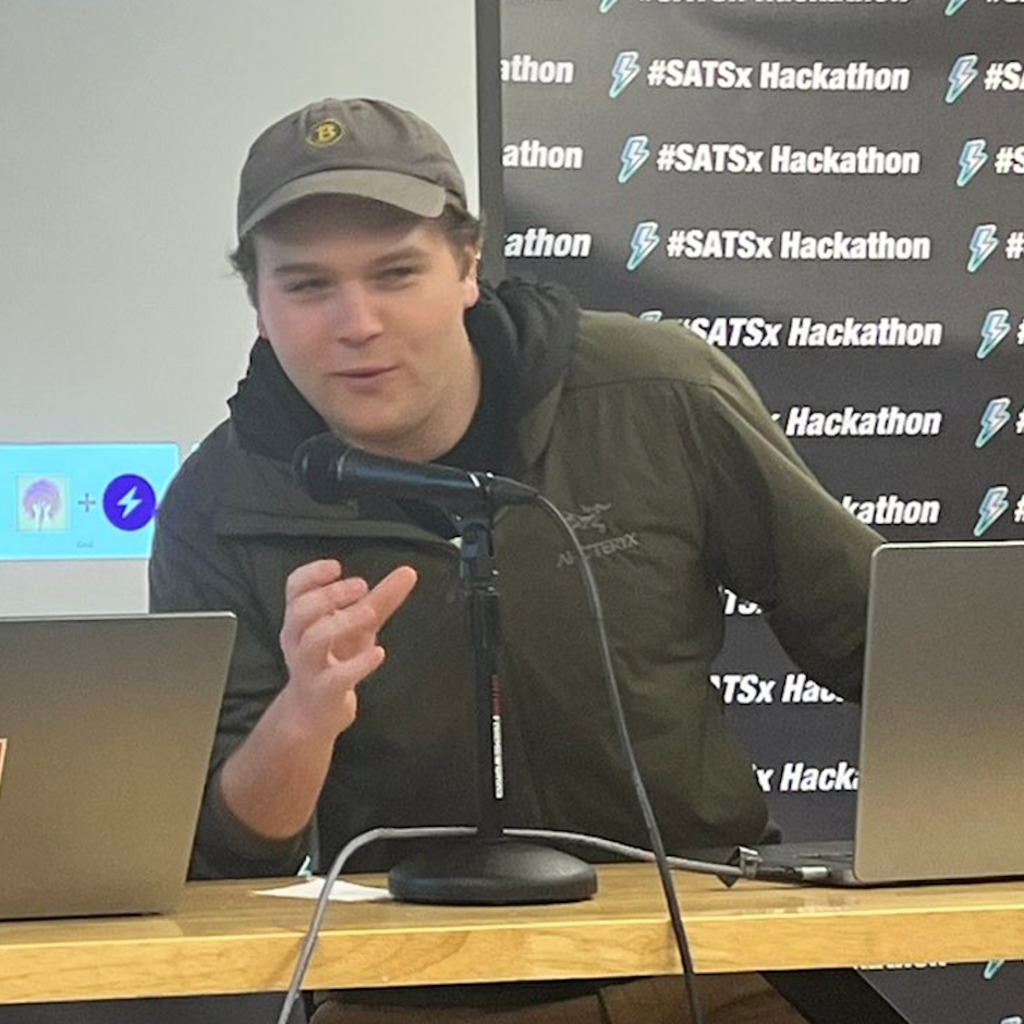

Modern Bitcoin bridges require data to be posted on chain. For example, a bridge operator posts a succinct proof to unlock a withdrawal. However, data is just data and can be created by anybody. To ensure that it comes from the operator, it must be authenticated. This means that the Bitcoin transactions that contain this data get very large. In this talk, we will go over the solutions to this problem: from Lamport signatures to adaptor signatures to experimental techniques. We will build an intuition for the hardness of this problem, how far we’ve gotten, and where future research is headed. Finally, we will connect the state of the problem with existing proposals in the greater Bitcoin universe. This talk will be accessible to all. No cryptographic background is required.

BDK is expanding to more places. It starts from a Rust wallet core, into the places where mobile wallets actually ship: Swift, Kotlin, and in 2026 newer libraries like Dart and React Native. This talk is about the engineering work behind that expansion. Using bdk-ffi as the main case study, I’ll walk through how BDK keeps reviewed Rust wallet logic as the source of truth while exposing native-feeling APIs. It will also tie in how this pattern is spreading across the Bitcoin ecosystem as more projects bring Rust libraries into mobile app stacks.

This tutorial introduces libbitcoinkernel, the emerging effort to expose Bitcoin Core’s validation engine as a reusable library. Instead of building a full Bitcoin node, we will focus on the boundary where raw consensus data becomes validated blockchain state. Using curated regtest blocks and transactions, participants will inspect serialized Bitcoin objects, distinguish parsing from context-free validation, and explore why transaction validity depends on external context such as previous outputs, amounts, scripts, and the UTXO set. We will then process a short block sequence into a fresh chainstate, observe validation callbacks, inspect the active chain, and briefly examine what happens when competing branches produce a reorganization. The tutorial uses Python bindings for speed and clarity, while continuously mapping each step back to the underlying C API. The goal is not to hide libbitcoinkernel behind abstractions, but to reveal how Bitcoin Core’s validation machinery can be exercised without P2P networking, RPC, wallet logic, or node infrastructure.

The modular inverse is an essential piece of computation required for elliptic curve operations used for digital signatures in Bitcoin and other applications. A novel approach to the extended Euclidean algorithm has been developed by Bernstein and Yang within the last few years and incorporated into the libsecp256k1 cryptographic library used by Bitcoin. However, novel algorithms introduce new risks of errors. To address this we have completed a computer verified proof of the correctness of (one of) libsecp256k1's modular inverse implementations with the Coq proof assistant using the Verifiable C's implementation of separation logic. https://arxiv.org/abs/2507.17956

What if elliptic curves broke and we needed to switch to something else? Most coins are protected by "key hash" style outputs that can can be safely moved because their EC pubkeys aren't publicly known. But what about coins where people have re-used addresses and the pubkeys are known? Most of those coins can also be safely migrated with techniques I'll describe in this talk.

Most discussions of Compact Block Filters focus on the protocol. This talk focuses on the users, and what wallet devs can expect if they are considering integrating Compact Block Filter syncing into their mobile/server applications. This talk covers the day-to-day reality of CBF-backed mobile wallets, mostly in comparison to standard-in-the-industry Electrum/Esplora setups. Storage footprint (~30–70 MB of chain data), bandwidth costs (~100 MB for months of history, more for wallet recovery), sync behaviour (minutes on WiFi for a yearly gap, seconds for daily use), and how background sync can make this nearly invisible to users. I will also be cover the tradeoffs, i.e. no mempool visibility and how unconfirmed transactions require user education, and fee estimation. The second half of the talk focuses on how to ship this today using BDK and the Kyoto light client. I'll look at what integration looks like, what decisions developers need to make, and what your users gain in terms of privacy and reduced infrastructure dependency. If you're building a Bitcoin mobile wallet and wondering whether CBF is ready for production or what your users can expect if you enable this type of syncing, this talk is for you!

Dispell some quantum FUD. Learn how we may one day reuse the math of elliptic curves to provide compact post-quantum signatures, replace constructions like BIP32, and have a few laughs in the process. After all, every existential crisis deserves a dose of levity.

tbd based on what I can get done in time


In this panel, Isabel Foxen Duke is joined by a few cryptographers and protocol engineers from the bitcoin dev community. They'll be covering the pros and cons of different quantum-related proposals for Bitcoin - including but not limited to "what to do with Satashi's Coins" // "best PQ signature schemes for Bitcoin -- e.g. hash-based or lattice-based schemes" // P2MR vs P2TRv2 etc.
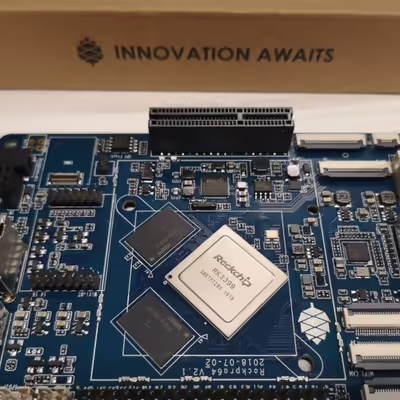
Don't need to do a talk, would prefer just a workshop, but could do one as well if you guys would like. It would cover quick history of DIY bitcoin hardware signers, and then current advancements in the ecosystem. For the workshop, I will have tons of hardware available for attendees to be able to play around with (see all the various projects throughout the years, flash firmware from various projects on various devices, send bitcoin signer txn via testnet, etc.) I have asked CryptoGuide, (@ytcryptoguide on X and 3rditeration on github) who is also local to the area, to help with my talk/workshop and last I asked he said he could help. I will confirm, but if I can get him as well he will bring a technical side to "DIYbitcoin" which I could never do. So, I find we offer a nice balance for users when learning about this topic.

An in-depth look at a transaction expiry proposal that introduces no opportunity for free relay. Applications such as expiring HTLCs and pseudo CLRTs may be discussed, depending on the allowed time and group interest.

Most everyone knows Bitcoin Core. But not many even know the existance of an alternative implementation. In this talk, I'll be going through what the development looks like for btcd. We'll be going through: development process and how it compares to Core, consensus struggles, and future outlook for btcd specifically.

Description to come
TBD

What are some functionalities that we want to enable with covenant opcodes in bitcoin and how are these functionalities implemented using OP_TEMPLATEHASH and OP_CHECKSIGFROMSTACK.

Description to come
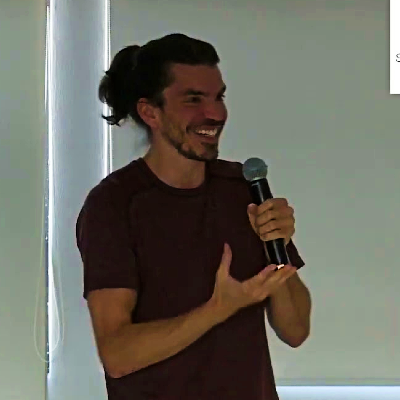
An overview of bip110 for developers, and why I think its the best next step for bitcoin
Bitcoin has changed a few times in its history, and we're now at a point of several proposals for new changes. In this 45m panel we invite a host of experienced developers to talk about their successes and plans for changing bitcoin.

Covenants are expanding the design space of Bitcoin. In this talk, I’ll share practical insights from hands-on work with introspection and covenant-style transaction design, focusing on the capabilities these primitives unlock, the constraints they impose, and the lessons they offer for Bitcoin developers thinking about more expressive transaction logic.

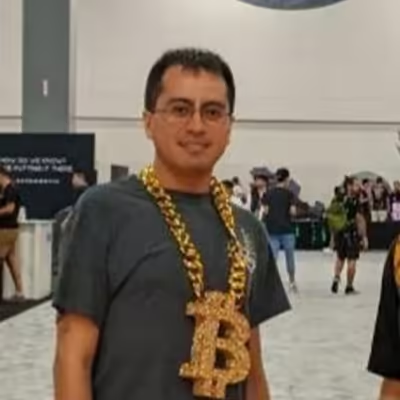
In this workshop we will learn what multi-sig wallets are, why they are more secure, and why they are good for both businesses and personal holdings. We will pretend we are a bitcoin business and we will practice wallet set up, sending transactions, and rotating lost keys together. We will use the Casa iOS and Android wallet with testnet Bitcoin and a collection of hardware wallets will be provided.

Discreet Log Contracts (DLCs) are one of Bitcoin's most powerful yet underutilized primitives. While often associated with prediction markets, futures, and options, DLCs can be used to build a wide range of Bitcoin-native financial applications. In this workshop, we'll explore DLCs through the lens of a production Bitcoin-backed lending platform and examine how the same building blocks can be applied to derivatives, stablecoins, escrow systems, and other contract-based applications. Topics include: - DLC fundamentals and settlement mechanics - Oracle announcements and attestations - Adaptor signatures and contract execution - Wallet and hardware wallet integrations - Bitcoin-backed lending architecture - Multi-oracle and production deployment considerations - Applying DLCs to futures, options, prediction markets, and other financial products Attendees will leave with a practical understanding of how DLCs work, how to integrate them into Bitcoin applications, and the tradeoffs involved in deploying DLC-based systems in production. Similar workshop can be seen here: https://github.com/TABConf/6.tabconf.com/issues/117

This talk will cover the objectives and challenges involved in creating and operating prediction markets on Bitcoin. Will cover everything from the history of mechanism design to the objectives of prediction markets as forecasting technologies.