
Upcoming talks at bitcoin++ Taipei 2025, sovereignty edition, Dec 15 - 17, 2025

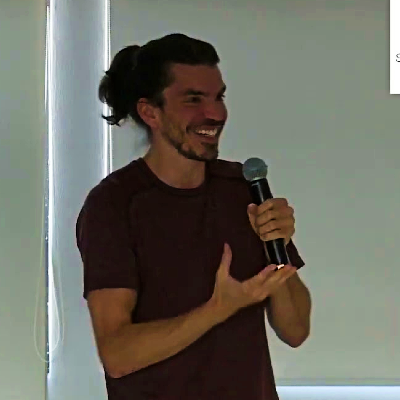
Nicolas talks about his work building NBXplorer.
Venue: Main Stage

BTCPayServer

Most Bitcoin tools stop at self-custody, but self-custody only gives permissionless exit. Real sovereignty requires permissionless use and permissionless continuity — the ability for a tool to keep functioning w/o the creator if needed. Developers rarely see this side because the real chokepoints aren’t in code; they’re in governance, regulation, incentives, and legal structures that quietly shape what tools can or cannot ship. This talk uses real examples to show why technically sound systems still fail, why most wallets today aren’t actually sovereign, and why developers themselves should care about building tools that outlive the entities that create them.
Venue: Talks Stage

Bitcoin Keeper, Bitcoin Tribe, Bitcoin4India

You've got to be very careful applying a new cryptographic scheme to an existing problem because it's so easy to make things worse. FROST, the threshold multisignature scheme with applications to Bitcoin, is no different. Lloyd will reveal the tricks the Frostsnap team used to exploit FROST while hiding (most of) the complexity from the user.
Venue: Main Stage

Frostsnap

Get hands-on with Stable Channels, an open-source system that brings stabilized, bitcoin-backed dollar balances to the Lightning Network. Stable Channels offers a decentralized and self-custodial alternative to centralized stablecoins. Install the desktop app for macOS, Linux, or Windows, or build the Rust code from source. You’ll spin up a Lightning node, create a mainnet Stable Channel, and observe the stabilization mechanism end-to-end.
Venue: Talks Stage

Stable Channels

With the accessibility of AI, we are closer than ever to actualizing the promise of open source: an internet where all code is freely shared, edited, and shipped by anyone, anywhere. But AI companies are also the biggest threat to this vision, hijacking the spirit of openness in the arms race to corporate dominance. This talk will discuss what open AI actually looks like — with full user control at every level, from clients and agents to models — and how we’re making it possible through Nostr and Bitcoin. Join our workshop later to try it hands-on!
Venue: Main Stage

Soapbox

A brief introduction to sovereign identity with Portal: what it is, how it works and how to get started
Venue: Main Stage

Portal technologies Inc

Portal technologies Inc

Lloyd, Evan, and likely Adam will also be attending. I still need to flesh out this idea with Lloyd, I will need to write some template code + basic infrastructure for the coding part of the workshop. We've never done this before but I think it is very feasible and would be awesome for participants. I would do some practice run-throughs well ahead of the conference. Phase 1 - Distributed Key Generation Theory - Basics of asymmetric cryptography (private & public key) - Shamir secret sharing (polynomials on whiteboard & discuss as group) - Interaction: get three audience members to shout out (simple) polynomial coefficients - Draw out and go through through Distributed Key Generation with these polynomials on the whiteboard. - At the end, we'll have three verified secret shares that correspond to a group private key (which no one ever learned!) Phase 2 - Let's make a FROST key - Programming! * Will use rust but no prior knowledge. * git clone * Once setup, on a hackmd (or better system if I can come up with one) we get participants to write their name next to an index (list: 1, 2 ...). * We decide on a threshold as a group (choose 2 or 3 so people can go crazy with signing later). * Participants each creates a scalar polynomial in rust! (2-3 LOC), write to disk using tool provided in code template. * Participants convert their scalar polynomial into a point polynomial, pastes into hackmd under their name. (1 LOC) * Participants evaluate their scalar polynomial at indexes (1, 2, ... n_parties), and pastes these evaluations on hackmd. (1 LOC) * Speakers collate these 'keygen shares', and distribute them to the intended recipients. * This could be done between tables through DMs. * E.g. Party 1's evaluation at i=3 goes to Party 3, evaluation at i=4 goes to Party 4. * Each audience participant receives their keygen shares. * They sum them all up to result in their FROST secret share! Phase 3 - Signing! * Introduce the concept of Nonces and how they relate to FROST. * Show signing API (show what we need to achieve signing!) * Show secpfun API to create a secret & public nonce. * Let audience participants pair up and share public nonces among themselves, (via hackmd or DMs)/ * Each participant will sign under a set of nonces with their partner! * Share and aggregate signature shares -> finished signature! * Verify signature * Bonus task -> sign nostr event! ~2 hours. --- Possible additional talk we could do: ### Dark Skippy Talk & Demo Introduction of Bitcoin hardware wallets. Dumbed down refresher on Schnorr signature mathematics (whiteboard or screen). Discuss the types attacks that a malicious signing device can perform. Start with easiest (predetermined private key), progress to tricks (output unrelated public keys), then nonce attacks (nonce-reuse), then introduce exfil attacks. See https://darkskippy.com/taxonomy.html. Introduce Dark Skippy and significance. Explanation of how Dark Skippy works, highlevel description of Pollard's Kangaroo Algorithm. Live Demo: Audience draw seedwords, or speakers generate onscreen. Import seed onto a corrupted SeedSigner (airgapped!1!). Fund wallet with 3 utxos. Run Dark Skippy attacker view onscreen. Sign a 3 input transaction, Broadcast Tx, thank u for the seedwords. <1 hour.
Venue: Talks Stage

Frostsnap

Build a Nostr app with AI-assisted programming, open source at every level! No programming, code, AI, or Nostr experience needed — open to complete beginners and experienced developers alike! You will walk away from this workshop knowing how to build websites and apps on Nostr with open source AI tools, how to publish your project and share it, how to edit an existing project with AI, and how to submit your changes to open source developers.
Venue: Main Stage

Soapbox

Signing devices are great, but they are not wallets. You may use them for multiple different wallets, at the same time! While "accounts" were introduced for this purpose, users don't know/care about it. This talk is the presentation of the current state of research for making xpubs always different, each time you use your signing device for a new wallet.
Venue: Main Stage

Wizardsardine

Banks used to be great... then everything changed when the surveillance state attacked. Pt. 1 Learn about building self-sovereign community banks with federated Chaumian ecash. Pt. 2 Hands on workshop to build a fedimint wallet with the Fedimint SDK.
Venue: Talks Stage

Fedi

Silent Payment is a static payment code scheme that rely on non interactive ECDH operations between sender and recipient(s) of a transaction to generate the scriptpubkeys, which means wallet developers need to totally rethink the way a wallet works. Dana is an attempt at a pure silent payment, privacy preserving mobile wallet, and highlight the main challenges and opportunities that wallet developers will encounter working on silent payment.
Venue: Main Stage

Silent Payments


I will introduce the concept of medical sovereignty (what it is and why it's important), give an overview of healthcare data access within the US (it's very fiat), and lay out a roadmap of how someone could start to take control over their own medical data.
Venue: Talks Stage



Building BDK exposed fundamental issues in how the Electrum protocol abstracts Bitcoin state. This talk examines how Electrum’s API incentivises unsafe assumptions, how wallets attempt to mitigate them, and what changes are needed to avoid a recurring class of wallet edge-case failures.
Venue: Main Stage


Sovereignty requires permissionless AI: Routstr provides open, permissionless access to AI by removing accounts, identity, and centralized gatekeepers. Through open-source routing and decentralized nodes, Routstr turns AI inference into a free market—neutral, censorship-resistant, and pay-per-use. AI becomes infrastructure, not a product.
Venue: Talks Stage

routstr

Everyone hacks! Let’s build some tools for sovereignty
Venue: Main Stage

bitcoin++
Fedi


First round of hackathon judging. Judges will walk around between all projects in a science fair style exposition. Top projects will advance to participate in the finals presentation on the last day.
Venue: Main Stage
Fedi
bitcoin++

An exploration of the modern hardware wallet landscape and the technical approaches for creating unified interfaces across different devices and platforms. What You'll Learn: This talk begins with the fundamentals—examining the threat model that hardware wallets address and diving into the technical components that make them secure, including secure elements and communication systems that protect your private keys. The session explores why cross-compatibility has become essential in today's ecosystem, particularly for multisig implementations, and examines the evolving standards like PSBT (Partially Signed Bitcoin Transactions) and BIP 388 that enable seamless interoperability. The core focus is a comprehensive implementation overview of common interface approaches. This deep dive traces the evolution from Bitcoin Core's original HWI through WizardSardine's async-hwi improvements, culminating in bhwi—the latest advancement that builds upon lessons learned from both predecessors. The presentation examines architectural decisions, compares approaches, and extracts practical patterns for building robust hardware wallet interfaces that work across multiple devices and platforms. This session is designed for developers building wallet software, hardware wallet manufacturers, and technical professionals looking to implement or improve hardware wallet integration in their projects.
Venue: Main Stage

Wizardsardine

In Bitcoin, censorship resistance depends on privacy: if transactions are transparent, it becomes trivial to blacklist, surveil, and suppress. The freedom to transact is necessary for free speech and assembly. Without the ability to spend, how can anyone publish writing or acquire transit to a meeting? This talk explores how Payjoin brings privacy-by-default to Bitcoin. Unlike other tech, Payjoin’s steganographic transaction looks ordinary while undermining surveillance heuristics to resist selective censorship. We’ll look at how Payjoin Foundation and the Payjoin Dev Kit (PDK) integrations make this privacy a practical default for wallets and services today. Finally, we’ll preview the consequences of next-genration Payjoin (v3) designs, which even keep knowledge of your addresses from your transaction counterparties.
Venue: Main Stage

Payjoin Foundation

Who will take home the top sats? Join us for the hackathon finals presentation where the teams advancing out of the expo compete to win bitcoin++’s first sovereignty hackathon
Venue: Main Stage
Fedi
bitcoin++

Zero Knowledge Proofs - and programmable cryptography more broadly - have exploded in popularity over the last several years. This talk gives an overview of what they are and how they enable sovereignty by letting us verify without revealing and compress heavy computation into succinct checks. We'll ground the ideas in cases studies across money, communication, markets and identity.
Venue: Main Stage


This is a hands-on workshop where you will learn how to use Ambrosia, a new point-of-sale application that uses PhoenixD for the wallet backend. Ambrosia was designed to be easily installed on very low-resource SBCs, allowing any merchant to accept bitcoin without trusting third parties with their funds or data, for under US$100. By enabling merchants to operate without TTPs, Ambrosia allows merchants to be truly sovereign, accelerating the separation of money and state. In this workshop, you will install and explore Ambrosia using your laptop.
Venue: Talks Stage
bitcoin devops

Bitcoin was born from the cypherpunk vision of self-sovereignty, a world where individuals control their money through code, not institutions. In this talk, we’ll explore how BULL Wallet, a fully open-source and Bitcoin-only mobile wallet, reclaims that ethos by blending usability with uncompromising privacy and technical purity. Built for both beginners and power users, BULL Wallet integrates on-chain, Lightning, and Liquid transactions, supports Payjoin, hardware wallets integration, autmated atomic-swaps and encryted vault backup (Recoverbull protocol), all without collecting a single data point or requiring user identification. Attendees will see how design choices rooted in freedom, cryptography, and simplicity can make sovereignty accessible to everyone, not just the cypherpunks. This is Bitcoin self-custody, sovereign by design.
Venue: Main Stage

Bull Bitcoin

Build a physical device which can notify you in the real world when you receive a Zap on Nostr. Requires $15USD for materials costs. Limited to 10 participants
Venue: Talks Stage

RITREK

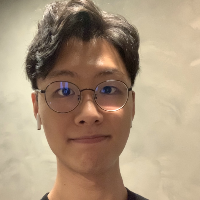
Ruben Somsen has published a new method of performing the initial block download. By utilizing SwiftSync, Utreexo nodes that are performing full validation are able to have 0 proof download overhead while having the benefits of avoid a costly database. We'll be going through how it works on the low level.
Venue: Main Stage
OpenSats

We sit down with some wallet legends to talk about the state of sovereignty in the bitcoin self-custody space
Venue: Main Stage
Frostsnap
Portal technologies Inc
Payjoin Foundation

bitcoin/bitcoin
bitcoin++

Hackathon winners announced and end of conference closing
Venue: Main Stage
Fedi
bitcoin++